
Key Takeaways:
-
Preparation is crucial: Clear the room, remove old flooring, and ensure the subfloor is smooth and even.
-
Measure accurately: Take multiple measurements, calculate square footage, and add extra for trimming and seams.
-
Cut carefully: Always measure twice, use a straight edge, and make shallow passes to avoid mistakes.
-
Use proper tools: Knee kicker, carpet stretcher, and tack strips are essential for a professional finish.
-
Stretch and secure: Proper stretching prevents wrinkles and ensures a tight fit; trim edges neatly for a polished look.
-
Pay attention to seams: Align and join seams carefully to make them flat and nearly invisible.
-
Maintain your carpet: Regular vacuuming, prompt spill management, and periodic deep cleaning extend the life and appearance of your carpet.
Installing carpet flooring for the first time can seem intimidating, especially if you’ve never picked up a knee kicker or stretched a carpet before. The good news is that with the right preparation, tools, and step-by-step guidance, you can transform your room with a professional-looking carpet installation — even as a beginner. In this guide, we’ll cover everything you need to know, from choosing the right carpet to tips that make the job easier and help your carpet last longer.
Why Install Carpet Yourself?
Many homeowners assume carpet installation requires a professional, but DIY installation can save hundreds or even thousands of dollars. Installing your own carpet also gives you the flexibility to choose exactly the style, padding, and layout that works for your space. Beyond cost savings, it’s also rewarding to see a room transformed with your own hands. With patience and careful planning, even a complete beginner can achieve excellent results.
Choosing the Right Carpet for Your Home

Before you start, you need to pick the right carpet. Here are a few things to consider:
-
Room Usage: High-traffic areas like hallways or living rooms require durable fibers, such as nylon or polyester. Bedrooms can accommodate softer carpets like plush or frieze.
-
Color and Pattern: Light-colored carpets make a room feel larger, while darker tones hide stains. Patterns can add personality and help conceal wear over time.
-
Padding: A quality carpet pad increases comfort and extends the life of your carpet. Consider density and thickness based on the room’s usage.
When selecting a carpet, it can be helpful to also research other flooring types. Including hardwood, laminate, and vinyl in your consideration can help you determine which style fits your budget and lifestyle. This can tie into understanding the best flooring options for home remodels, giving you context for why carpet might be your ideal choice.
Tools You’ll Need for Carpet Installation
Having the right tools makes the process smoother and reduces mistakes. Here’s a list of essentials:
-
Knee kicker
-
Carpet stretcher
-
Utility knife with fresh blades
-
Measuring tape
-
Carpet seam tape
-
Staple gun
-
Hammer and tack strips
-
Heavy-duty gloves
-
Straight edge or ruler
Some optional but helpful tools include a power stretcher for larger rooms and a seam roller for smoothing carpet seams.
Preparing Your Room for Installation
Preparation is key to a smooth carpet installation. Begin by removing all furniture and clearing the floor completely. Next, remove any old flooring, baseboards, and leftover nails or staples. Carefully inspect the subfloor for damage or uneven areas, as these can cause lumps or premature wear in your carpet. Sand or fill any low spots and make sure the surface is clean, dry, and smooth — a well-prepared floor is the foundation of a professional-looking carpet installation.
Measuring Your Room Accurately
Once your room is prepped, the next step is accurate measurement. Proper measurements prevent buying too much or too little carpet and save you from costly mistakes.
-
Measure the length and width of the room in several places — floors are rarely perfect rectangles.
-
Multiply the maximum length by the maximum width to calculate the total square footage.
-
Add 10% extra to account for waste, trimming, and seams.
Accurate measurements ensure you have enough carpet to cover the space and avoid mid-project surprises.
How to Cut Carpet Without Mistakes
With measurements in hand, it’s time to cut your carpet. Cutting can be tricky, especially around corners or irregular spaces, so take your time.
-
Always measure twice and cut once.
-
Use a straight edge to guide your utility knife.
-
Make multiple shallow passes rather than trying to cut through thick carpet in one go.
-
Leave a little extra at the edges to trim after stretching.
Proper cutting ensures clean edges, reduces fraying, and makes it easier to join seams later on.
Installing Tack Strips and Padding
Next, it’s time to anchor your carpet with tack strips and lay the padding. Tack strips go around the perimeter of the room, leaving a small gap between the strip and the wall. Once installed, roll out the carpet padding over the subfloor and secure it with staples or adhesive tape. Ensure the padding is smooth and wrinkle-free, as bumps will transfer to the carpet above. Proper padding improves comfort and extends the life of your carpet.
Laying the Carpet and Joining Seams
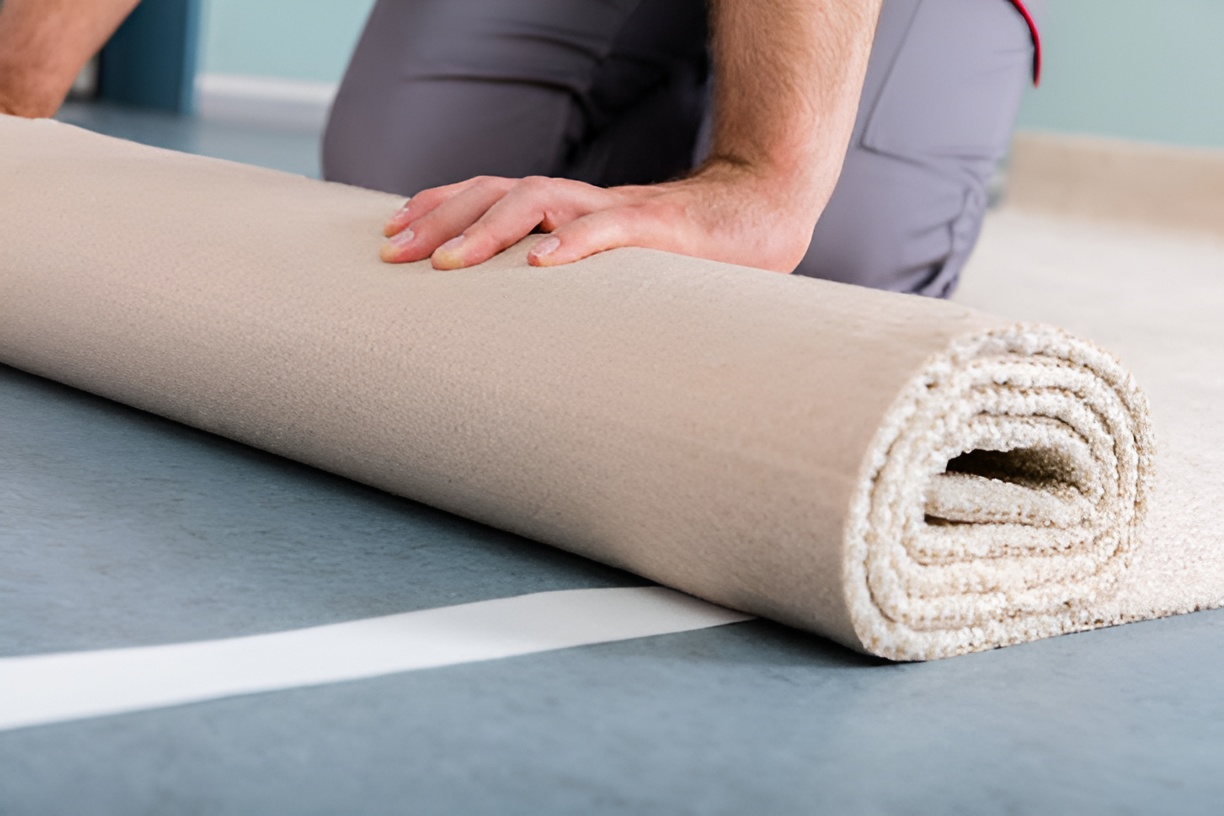
With padding in place, roll out your carpet and align it along the walls. If your carpet comes in multiple pieces, join them carefully using seam tape:
-
Lay the tape under the seam.
-
Heat it with a seaming iron.
-
Press the carpet edges onto the tape, ensuring seams are flat and nearly invisible.
Take your time at this stage — well-aligned seams make a huge difference in the finished appearance.
Stretching Carpet for a Smooth Finish
Stretching your carpet ensures a wrinkle-free, tight fit. Use a knee kicker for small areas and a power stretcher for larger rooms. Start at one wall and stretch toward the opposite side, anchoring the carpet onto the tack strips as you go. Frequently check for bubbles or loose spots and adjust as needed. Proper stretching prevents future ripples and keeps the carpet looking professional for years.
Trimming and Securing the Edges
Finally, trim any excess carpet along the edges using a straight edge and utility knife. Press the carpet firmly onto the tack strips using your hands or a knee kicker. Reinstall baseboards or molding to finish the room with a polished, professional look. Once done, step back and admire your handiwork — a properly installed carpet can transform the feel and comfort of any room.
Cleaning and Maintaining Your New Carpet
Once installed, cleaning and maintaining your new carpet is essential for keeping it looking fresh, lasting longer, and contributing to a healthier home. Proper care goes beyond aesthetics — it impacts comfort and indoor air quality. Here’s a detailed guide to help you maintain your carpet like a pro:
-
Vacuum frequently:
-
High-traffic areas may need daily or every-other-day vacuuming.
-
Low-traffic rooms can be vacuumed 1–2 times per week.
-
Use a vacuum with strong suction and a rotating brush to remove dirt, dust, and allergens from deep within the fibers.
-
-
Handle spills promptly:
-
Blot liquids immediately with a clean cloth — avoid rubbing to prevent pushing stains deeper.
-
Use a gentle carpet cleaner suitable for your carpet type.
-
For stubborn stains, test cleaning solutions on a hidden area first.
-
-
Rotate furniture and protect high-traffic zones:
-
Move furniture occasionally to prevent uneven wear and crushing of fibers.
-
Use furniture coasters or pads to reduce pressure on the carpet.
-
Place entry mats or area rugs in heavy-use areas to trap dirt before it reaches the carpet.
-
-
Deep cleaning and professional maintenance:
-
Schedule professional carpet cleaning once or twice a year.
-
Steam cleaning or hot water extraction removes embedded dirt and allergens.
-
Regular professional cleaning also helps prevent mold and bacteria buildup.
-
-
Check and maintain padding:
-
Inspect carpet padding periodically to ensure it isn’t compressed or damaged.
-
Proper padding extends carpet life, improves comfort, and helps maintain a smooth, even surface.
-
Maintaining cleanliness isn’t just about looks — it directly affects health. Understanding how clean carpets improve indoor air quality reinforces why regular vacuuming, prompt stain removal, and periodic deep cleaning are so important, especially in homes with children, pets, or high foot traffic.
Common Mistakes to Avoid During Installation
Even first-time installers can avoid common pitfalls with the right guidance. Watch out for:
-
Skipping room prep — any bumps or debris will show in the carpet.
-
Misaligned seams — take your time to line pieces up perfectly.
-
Incorrect stretching — failing to stretch properly can result in wrinkles over time.
-
Cutting too short — always leave a little extra to trim after stretching.
-
Ignoring padding — a thin or improperly installed pad reduces comfort and lifespan.
Questions You Might Have About Carpet Installation
Can I install carpet on stairs?
Yes, but stairs require extra care. Cut pieces to fit each step, secure the edges, and use staples or adhesive to keep the carpet in place. A stair tool can make the process easier and provide a professional look.
How long does it take to install carpet in a typical room?
For a medium-sized room, expect 2–4 hours for beginners. Larger rooms or irregular spaces can take longer, especially when joining seams or stretching carpet.
Do I need special tools for corners and odd angles?
A straight edge, utility knife, and patience are usually sufficient. For tight corners, consider a carpet kicker to help stretch the carpet into place.
Can I install carpet over existing flooring?
Yes, as long as the old floor is level, stable, and free of moisture issues. Remove any loose or damaged sections and use padding for a smoother finish.
Tips for a Smoother Installation Experience
-
Work slowly and don’t rush; precision beats speed.
-
Keep your utility knife sharp to prevent fraying.
-
Ask a friend to help with stretching or holding carpet in place.
-
Mark the seams lightly with chalk for accuracy.
-
Take breaks to step back and inspect your progress from different angles.
Wrapping It Up
Installing carpet flooring as a first-timer might feel overwhelming at first, but breaking the process into manageable steps makes it achievable. Remember to prepare the room, measure accurately, cut carefully, stretch properly, and maintain your carpet after installation. With these tips, even beginners can achieve a clean, professional-looking result.
A little patience goes a long way. Take your time, double-check measurements, and enjoy the process. Once finished, you’ll have a beautiful, comfortable space that reflects your effort and attention to detail.